
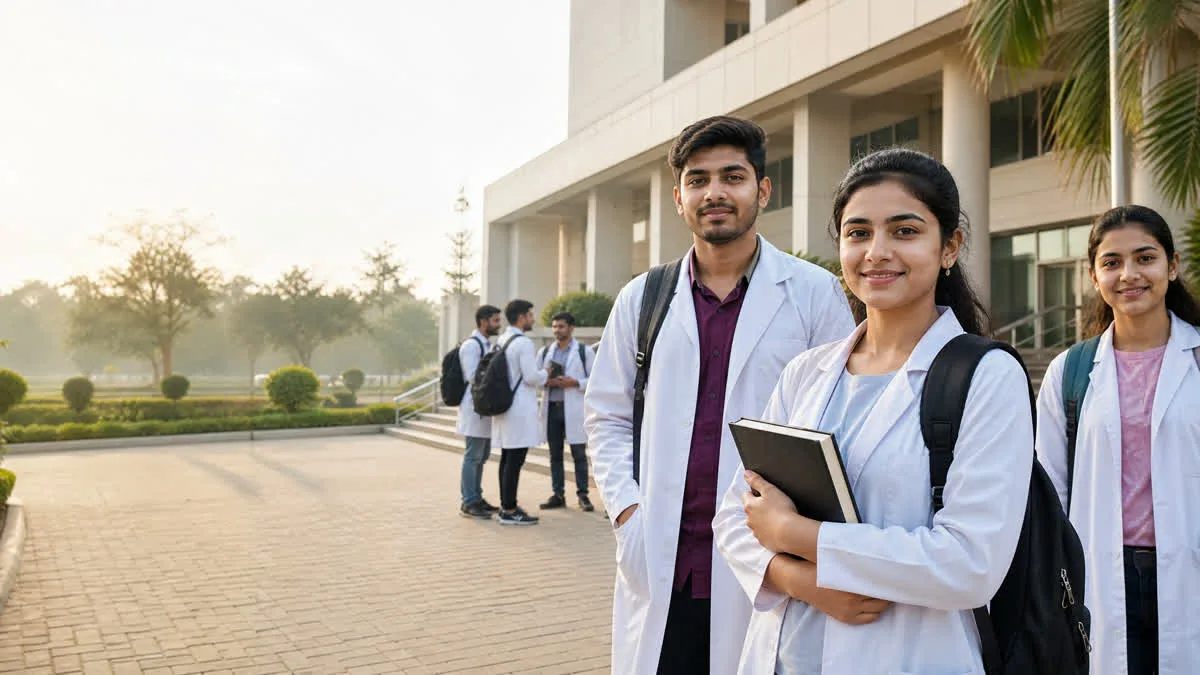
Updated: October 2026 · Session 2026-27 · Fees as per the official OSPMC fee circular
Every year, thousands of 12th-pass students across Haryana ask the same question: which paramedical course should I choose, how much will it cost, and do I need NEET? This guide answers all of it in one place: the courses available after 12th, who each one suits, the exact 2026-27 fees, eligibility, how Diploma, B.Voc and B.Sc differ, and how students from Karnal, Kurukshetra, Yamunanagar, Panchkula, Chandigarh, Mohali and Patiala can study at a hospital-campus college in Ambala.
Quick Answer
After 12th in Haryana you can choose a 2-year Diploma (DMLT, OT Technician, Optometry, Cath Lab, Dialysis), a 3-year B.Voc or a 4-year B.Sc in allied healthcare. At OSPMC Ambala, admission is through direct counselling with no NEET score required, eligibility is 10+2 with 45%, and 2026-27 tuition starts at ₹50,000 per year, payable in 3 installments.
Quick Facts: Paramedical Courses at OSPMC Ambala (2026-27)
| Detail | OSPMC Ambala |
|---|---|
| Courses available | 22 courses: 5 Diplomas, 10 B.Voc, 6 B.Sc and BMLS |
| Duration | Diploma 2 years · B.Voc 3 years · B.Sc 4 years · BMLS 3.5 years |
| Eligibility | 10+2 from a recognised board, minimum 45% aggregate, minimum age 17 years |
| NEET required? | No. Admission is through direct merit-based counselling |
| Annual tuition fee | ₹50,000 (Diplomas) · ₹55,000 (B.Voc) · ₹60,000 (B.Sc and BMLS) |
| Fee installments | Three per year |
| Other fees | Admission form ₹2,000 (one time) · Exam fee ₹1,000 per semester (Diploma, B.Voc), ₹2,000 per semester (B.Sc, BMLS) |
| Practical training | Philadelphia Mission Hospital campus, Arya Chowk, Ambala City |
| Established | 2004 |
| Admission helpline | 90341-93228 · 80594-10073 · 72069-84438 |
What Are Paramedical (Allied Healthcare) Courses?
Paramedical or allied healthcare courses train you for the technical and clinical work that keeps a hospital running outside the doctor's consultation: testing blood and samples in the laboratory, preparing the operation theatre, taking X-rays, running dialysis machines, testing eyesight, assisting in the cath lab, sterilising instruments and managing patient care and hospital operations.
Doctors depend on these professionals for almost every diagnosis and procedure. That is why paramedical courses are a practical choice for students who want a healthcare career but do not want to spend years preparing for MBBS entrance exams.
Can You Do a Paramedical Course After 12th Without NEET?
Yes. At OSPMC Ambala, admission to the Diploma, B.Voc and B.Sc allied healthcare courses is through direct merit-based counselling. Your 10+2 result decides eligibility, and a NEET score is not part of the listed eligibility for the 2026-27 session. This makes paramedical courses one of the most direct routes into healthcare after 12th.
What you do need is the right stream for the course. Most courses ask for Science (PCB or PCM), while DMLT also accepts students from any stream with Science preferred. The full eligibility is covered below.
All Paramedical Courses After 12th at OSPMC Ambala
Courses are offered at three levels. Click any course to see its full syllabus, practical training, fee schedule and FAQs.
Diploma (2 Years)
- Diploma in Medical Lab Technology (DMLT)
- Diploma in Operation Theatre Technician (OTT)
- Diploma in Optometry
- Diploma in Cardiac Cath Lab (CCT)
- Diploma in Dialysis Technician
B.Voc (3 Years)
- B.Voc Medical Lab Technology (MLT)
- B.Voc Operation Theatre Technology (OTT)
- B.Voc Radiology and Medical Imaging Technology (RMIT)
- B.Voc Optometry Technology
- B.Voc Dialysis Technology
- B.Voc Cardiac Care Technology
- B.Voc Hospital Sterilization (CSSD)
- B.Voc Patient Care
- B.Voc Hospital Management
- B.Voc Dietetics and Nutrition
B.Sc (4 Years)
- B.Sc. Medical Lab Technology (MLT)
- B.Sc. Operation Theatre Technology (OTT)
- B.Sc. Radiology and Medical Imaging Technology (RMIT)
- B.Sc. Optometry
- B.Sc. Dialysis
- B.Sc. Cardiac Care
BMLS (3.5 Years)
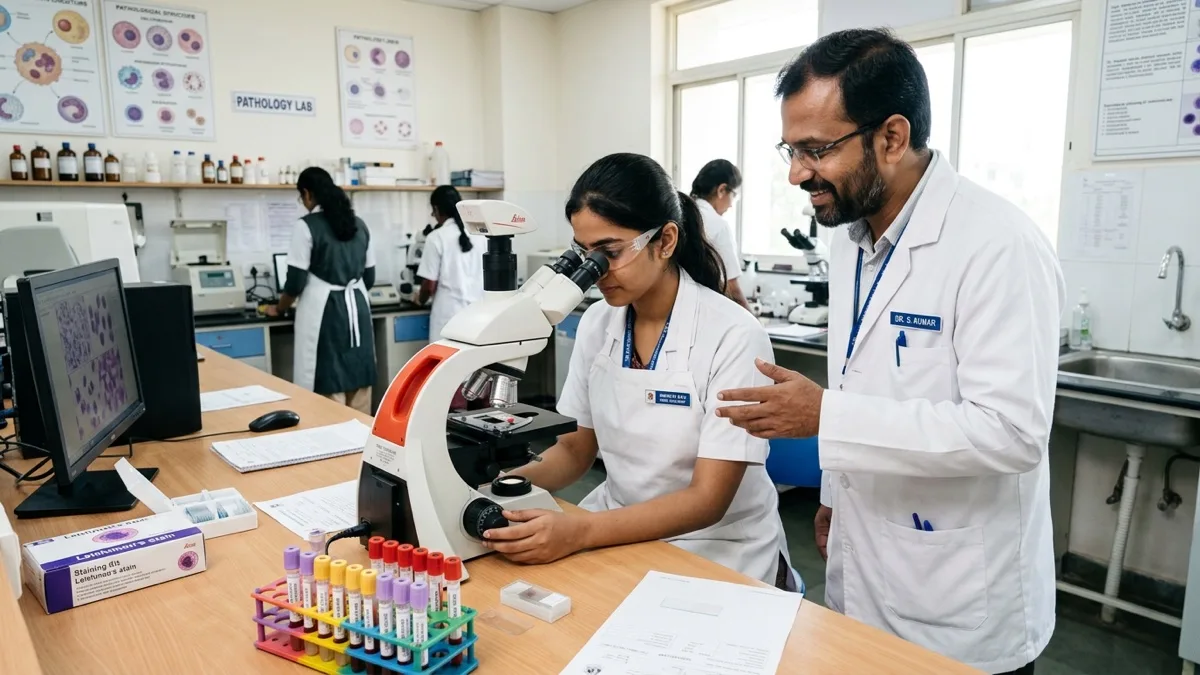
Laboratory practical training for DMLT and MLT students at OSPMC, Ambala.
Which Paramedical Field Suits You? A Field-by-Field Guide
Start with the kind of work you enjoy. Each field below explains what you will actually do, where you can work and which OSPMC course levels are available.
1. Medical Laboratory Technology (DMLT, MLT, BMLS)
You test blood, urine and other samples in pathology, haematology, biochemistry and microbiology. Doctors use these reports to diagnose and monitor disease. Suits students who like science, precision and working with instruments such as microscopes and analysers.
Where you can work: Hospital laboratories, diagnostic and pathology centres, blood banks and research laboratories.
Courses at OSPMC: DMLT · B.Voc MLT · B.Sc MLT · BMLS
2. Operation Theatre Technology (OTT)
You prepare the operation theatre, handle sterile instruments and equipment and assist the surgical and anaesthesia team before, during and after surgery. Suits students who stay calm under pressure and enjoy fast, hands-on teamwork.
Where you can work: Operation theatres of multispecialty and surgical hospitals, emergency and trauma units, day-care surgery centres.
Courses at OSPMC: Diploma OTT · B.Voc OTT · B.Sc OTT
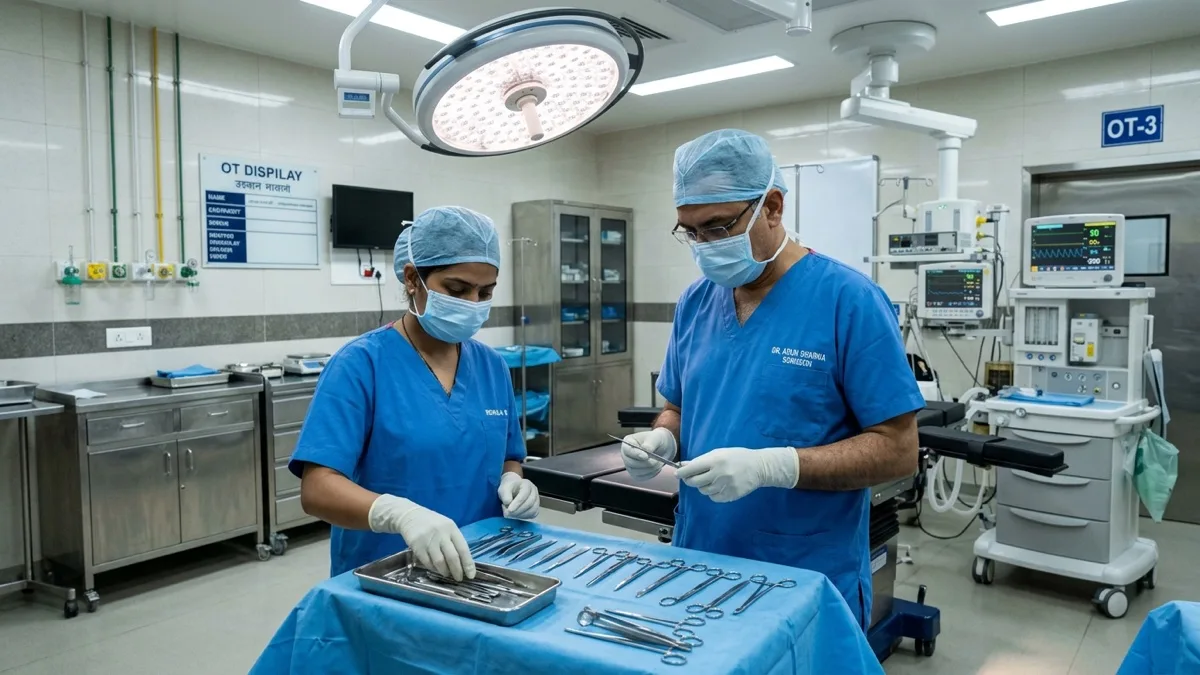
Operation theatre technology training at OSPMC, Ambala.
3. Radiology and Medical Imaging Technology (RMIT)
You operate X-ray and other imaging equipment, position patients correctly and follow radiation safety rules so that doctors get clear diagnostic images. Suits students interested in technology and physics.
Where you can work: Hospital radiology departments, imaging and diagnostic centres.
Courses at OSPMC: B.Voc RMIT · B.Sc RMIT
4. Dialysis Technology
You run haemodialysis sessions for kidney patients: preparing the machine, monitoring the patient throughout the session and maintaining equipment hygiene. Suits caring, patient and detail-oriented students.
Where you can work: Dialysis units of hospitals and standalone dialysis centres.
Courses at OSPMC: Diploma Dialysis · B.Voc Dialysis · B.Sc Dialysis
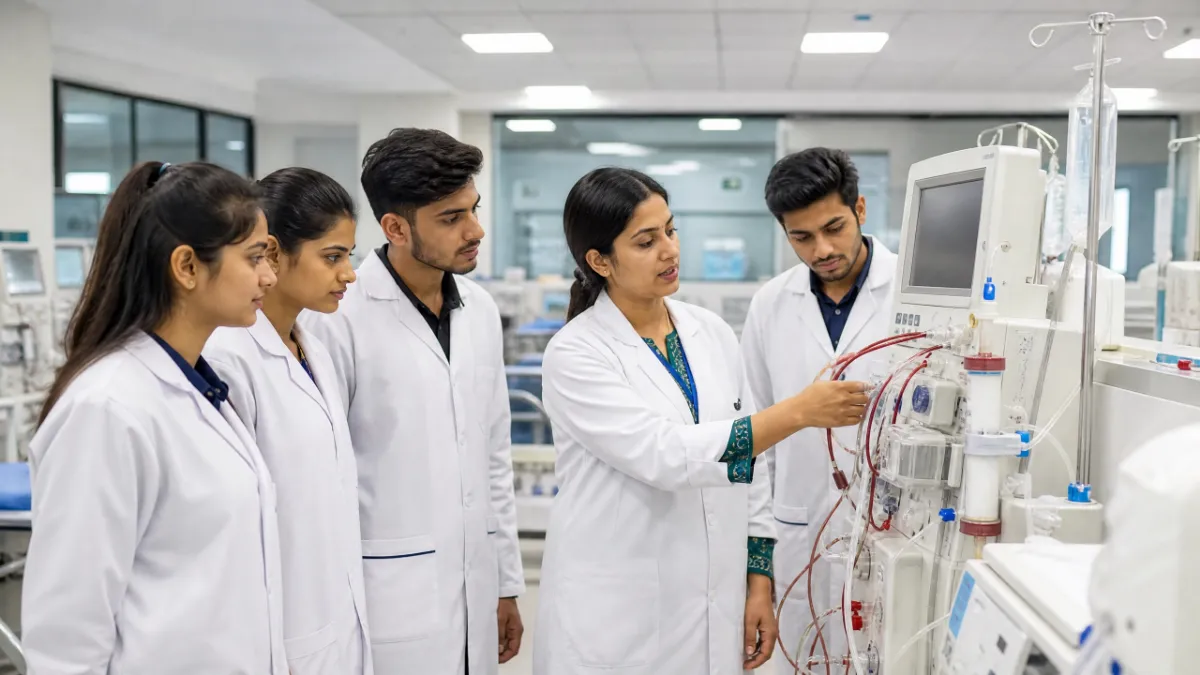
Dialysis technician training at OSPMC, Ambala.
5. Optometry
You test vision, measure refractive errors, help with spectacles and contact lenses and support eye doctors in the OPD. Suits students who like working directly with people.
Where you can work: Eye hospitals and eye OPDs, optical stores and vision care clinics.
Courses at OSPMC: Diploma Optometry · B.Voc Optometry · B.Sc Optometry
6. Cardiac Care and Cath Lab Technology
You assist the cardiology team in the cath lab and with heart tests, handle monitoring equipment and support patients through cardiac procedures. Suits focused students interested in a specialised department.
Where you can work: Cardiology departments, cath labs and heart care centres of larger hospitals.
Courses at OSPMC: Diploma Cath Lab · B.Voc Cardiac Care · B.Sc Cardiac Care
7. Hospital Support Specialisations (CSSD, Patient Care, Hospital Management, Dietetics)
These B.Voc programmes prepare you for the departments that keep a hospital safe and organised: sterilising instruments (CSSD), bedside patient care, hospital administration and clinical nutrition.
Where you can work: Hospital CSSD departments, wards, front office and administration, and dietetics departments.
Courses at OSPMC: B.Voc CSSD · B.Voc Patient Care · B.Voc Hospital Management · B.Voc Dietetics and Nutrition
Paramedical Course Fees in Haryana 2026-27 (OSPMC Official Fee Structure)
These are the official tuition fees for the 2026-27 session at OSPMC Ambala. Each year's fee is paid in 3 installments.
| Course group | Annual tuition fee (2026-27) |
|---|---|
| Diploma Programs (2 years): DMLT, OT Technician, Optometry, Cath Lab, Dialysis Technician | ₹50,000 per year (₹15,000 + ₹17,500 + ₹17,500) Total tuition: Diploma: ₹1,00,000 for 2 years |
| B.Voc Degree Programs (3 years): MLT, OT, Radiology, Optometry, Dialysis, Cardiac Care, CSSD, Patient Care, Hospital Management, Dietetics | ₹55,000 per year (₹15,000 + ₹20,000 + ₹20,000) Total tuition: B.Voc: ₹1,65,000 for 3 years |
| B.Sc Degree Programs (4 years) and BMLS (3.5 years) | ₹60,000 per year (₹20,000 + ₹20,000 + ₹20,000) Total tuition: B.Sc: ₹2,40,000 for 4 years |
Other fees: a one-time admission form fee of ₹2,000, and an examination fee of ₹1,000 per semester (Diploma, B.Voc) or ₹2,000 per semester (B.Sc, BMLS). The complete schedule is also on the Fee Structure page.
Example: a student joining DMLT pays ₹15,000 + ₹17,500 + ₹17,500 in each of the two years, which is ₹1,00,000 in total tuition for the full course.
Diploma vs B.Voc vs B.Sc: Which Should You Choose?
All three levels lead to healthcare careers. The right choice depends on how quickly you want to start working, your budget and how far you want to grow.
Choose a 2-Year Diploma if
- You want to start working as a technician as early as possible.
- You want the lowest total cost (₹1,00,000 tuition for the full course).
- You are clear about your field (lab, OT, optometry, cath lab or dialysis).
Choose a 3-Year B.Voc if
- You want a degree with a strong practical, job-oriented focus.
- You are interested in specialisations such as CSSD, patient care, hospital management or dietetics, which OSPMC offers at the B.Voc level.
- You want more training time than a diploma without committing to four years.
Choose a 4-Year B.Sc if
- You want the deepest subject knowledge and a strong base for senior or supervisory roles.
- You may want to go for higher studies later.
- You are sure about a field such as MLT, OT, Radiology, Optometry, Dialysis or Cardiac Care.
Already have a diploma? The OSPMC fee circular also lists lateral entry into B.Voc and B.Sc. Ask the admission team whether your diploma qualifies.
Eligibility and Admission Process at OSPMC Ambala
Eligibility
- 10+2 pass from a recognised board: CBSE, HBSE, ICSE or a state board.
- Minimum 45% aggregate marks.
- Science stream (PCB or PCM) for most courses. DMLT also accepts any stream, with Science preferred.
- Minimum age 17 years at the time of admission.
- No NEET score required.
Admission in 5 steps
- Get counselling: call 90341-93228 or message the admission team on WhatsApp to choose your course.
- Apply: fill the form online or offline.
- Keep your documents ready: your 10th and 12th mark sheets and ID proof. The admission team will confirm the full list.
- Confirm your seat: the team confirms seat availability in your course.
- Pay the first installment: pay at the college or online.
Studying at OSPMC from Nearby Cities: Karnal, Kurukshetra, Yamunanagar, Panchkula, Chandigarh, Mohali and Patiala
Ambala sits at the centre of the Haryana-Punjab-Chandigarh region, which makes OSPMC a practical option for students from neighbouring districts. The campus is at the Philadelphia Mission Hospital, Arya Chowk, Ambala City, and Ambala Cantt is one of the major railway junctions of North India.
| Your city | Getting to OSPMC Ambala |
|---|---|
| Karnal | On the Delhi-Ambala rail line and NH-44, which runs straight to Ambala. |
| Kurukshetra | On the same Delhi-Ambala rail line and NH-44, between Karnal and Ambala. |
| Yamunanagar / Jagadhri | Yamunanagar-Jagadhri station is on the Ambala-Saharanpur rail line; also connected by road. |
| Chandigarh | Connected to Ambala by the Kalka-Ambala rail line and by road. |
| Panchkula | Part of the Chandigarh tricity; reach Ambala by road or via Chandigarh railway station. |
| Mohali | Part of the Chandigarh tricity; reach Ambala by road or via Chandigarh railway station. |
| Patiala | Connected to Ambala by road via Rajpura. |
Planning to shift to Ambala for the course? Ask the admission team about stay options near the campus before you visit, and bring your documents so counselling and admission can be completed on the same day.
How to Choose the Right Paramedical College in Haryana: 6-Point Checklist
Before you pay any fee, check these six things with any college you are considering, including ours:
- Hospital access: is there a working hospital where you will practise on real equipment and patients?
- Practical time: how much of the course is hands-on in labs, OT, dialysis or imaging?
- Awarding body: which university or board will award your diploma or degree?
- Complete fee in writing: tuition per year, installment dates, and examination and registration fees.
- Eligibility match: does your 12th stream and percentage meet the course requirement?
- Counselling: can you speak to the admission team and visit the campus before deciding?
At OSPMC, training happens on the Philadelphia Mission Hospital campus, fees are published course by course with a 3-installment schedule, and counselling is available on call and WhatsApp before you apply.
Career Options After a Paramedical Course
Allied healthcare skills are needed wherever patients are diagnosed or treated. Depending on your course, you can work in:
- Hospital laboratories, diagnostic centres and blood banks (MLT, DMLT, BMLS)
- Operation theatres and emergency units (OTT)
- Radiology and imaging departments (RMIT)
- Dialysis units and kidney care centres (Dialysis Technology)
- Eye hospitals, eye OPDs and optical stores (Optometry)
- Cardiology departments and cath labs (Cardiac Care)
- CSSD, wards, hospital administration and dietetics departments (B.Voc specialisations)
Pay depends on your city, employer, course level and experience. Ask the counsellors about recent placement examples for the course you are considering. A diploma can be followed by lateral entry into a degree, and a degree opens the door to supervisory roles and higher studies.
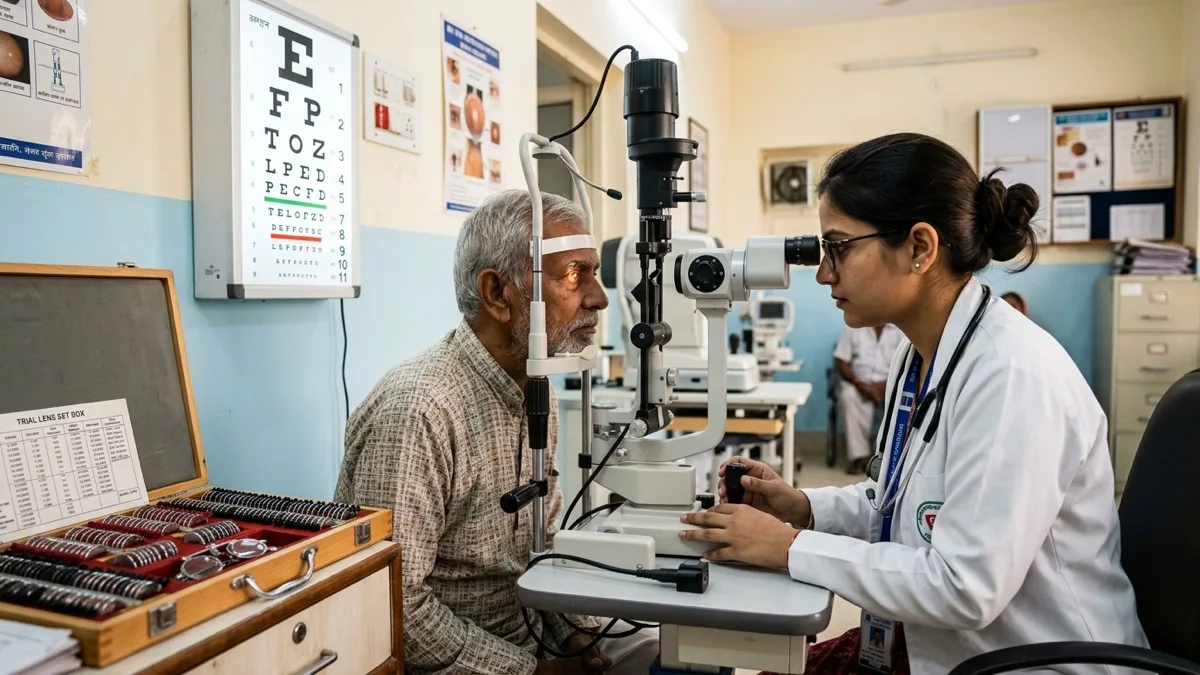
Optometry practical training at OSPMC, Ambala.
Frequently Asked Questions
Which paramedical course is best after 12th in Haryana?
There is no single best course. If you like lab work, choose DMLT or B.Sc/B.Voc MLT. If you want to work inside operation theatres, choose OT Technology. Radiology suits students interested in X-ray and imaging, while Optometry, Dialysis and Cardiac Care lead to specialised hospital departments. Pick the field first, then the level: Diploma (2 years), B.Voc (3 years) or B.Sc (4 years).
Can I do a paramedical course after 12th without NEET?
Yes. At OM SAI PARA MEDICAL COLLEGE (OSPMC), Ambala, admission to the Diploma, B.Voc and B.Sc allied healthcare courses is through direct merit-based counselling. A NEET score is not part of the listed eligibility for the 2026-27 session.
What is the eligibility for paramedical courses at OSPMC Ambala?
You need to pass 10+2 from a recognised board (CBSE, HBSE, ICSE or a state board) with at least 45% aggregate marks and be at least 17 years old. Most courses ask for Science (PCB or PCM). DMLT also accepts candidates from any stream, with Science preferred.
What is the fee of DMLT in Ambala at OSPMC?
The DMLT tuition fee for the 2026-27 session is ₹50,000 per year, paid in 3 installments of ₹15,000, ₹17,500 and ₹17,500. For the 2-year course that is ₹1,00,000 in tuition. A one-time admission form fee of ₹2,000 and an examination fee of ₹1,000 per semester are extra.
Can I pay the paramedical course fee in installments?
Yes. Every year's fee is split into 3 installments. For example, B.Voc courses are ₹55,000 per year, paid as ₹15,000 + ₹20,000 + ₹20,000, and B.Sc courses are ₹60,000 per year, paid as ₹20,000 + ₹20,000 + ₹20,000.
Is a Diploma or a B.Sc better for paramedical jobs?
A 2-year Diploma is the fastest route to a technician job and costs less. A B.Voc (3 years) or B.Sc (4 years) takes longer but gives a degree, deeper subject knowledge and a better base for supervisory roles and further study. Diploma holders can also explore lateral entry into B.Voc or B.Sc later.
Where do OSPMC students do their practical training?
OSPMC runs on the Philadelphia Mission Hospital campus at Arya Chowk, Ambala City. Students get hospital-linked practical exposure in departments such as the operation theatre, dialysis unit, pathology laboratory and eye OPD, alongside classroom teaching.
I live in Chandigarh, Panchkula, Mohali, Karnal, Kurukshetra, Yamunanagar or Patiala. Can I study at OSPMC Ambala?
Yes. Ambala is well connected to all these cities. Ambala Cantt is a major railway junction, Karnal and Kurukshetra lie on the Delhi-Ambala rail line and NH-44, Yamunanagar-Jagadhri is on the Ambala-Saharanpur line, Chandigarh is linked by the Kalka-Ambala line and road, and Patiala connects by road via Rajpura. Call or WhatsApp the admission team to plan your visit.
Who awards the diploma and degree at OSPMC?
As per the college fee circular, diplomas are awarded by IIPMT Punjab and IPH&H New Delhi. For degree programmes, OSPMC is a knowledge partner of Sanskaram University, Jhajjar, Haryana. Ask the admission team for the exact awarding body of the course you choose.
How do I apply for admission at OSPMC Ambala for 2026-27?
Talk to the admission team on WhatsApp or call 90341-93228 for counselling, then apply online or offline through the college website, submit your documents and pay the first installment. The team will confirm the document list and seat availability for your course.
Talk to the OSPMC Admission Team
Not sure which course fits your 12th stream, budget or career plan? Get free counselling on WhatsApp or call 90341-93228, 80594-10073 or 72069-84438.
Chat with Admission Team on WhatsApp
0 comments
Be the first to comment on this article.