

The healthcare and paramedical sector in India is experiencing unprecedented technological advancement and career expansion. As modern clinical diagnosis, surgical technologies, and patient management protocols become increasingly sophisticated, trained healthcare professionals specializing in BMLS Course 2026: Bachelor of Medical Laboratory Science (4 Yrs) Fees, Syllabus and Career Scope have become indispensable to hospital workflows.
Philadelphia Mission Hospital Diagnostic Laboratory SOP • OSPMC Ambala. Below is the visual clinical protocol flowchart:
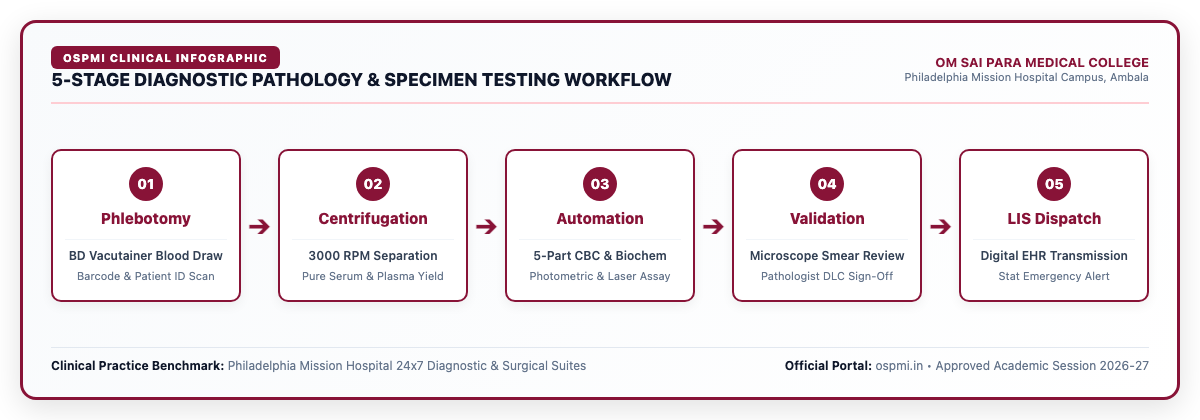
| Stage | Clinical Operation | Diagnostic Machinery Used | Quality Control Benchmark |
|---|---|---|---|
| 01. Collection | Barcoded vacuum blood draw (EDTA, Heparin, Fluoride) | BD Vacutainer multi-sample safety needles | Zero pre-analytical hemolysis rate |
| 02. Processing | High-speed refrigerated component centrifugation | Digital refrigerated clinical centrifuge | Complete cellular separation in 10 mins |
| 03. Analysis | Quantitative photometric & laser flow cytometry | Erba Chem 5X & 5-Part Hematology Counter | Daily Levey-Jennings & Westgard rule check |
| 04. Verification | Peripheral blood smear examination & anomaly confirmation | Trinocular oil-immersion 1000x microscope | Senior Pathologist double-read sign-off |
| 05. Dispatch | LIS electronic delivery & emergency panic value alerts | Integrated Hospital Laboratory Information System | < 45 mins TAT for Stat emergency ICU labs |
At Om Sai Para Medical College (OSPMC), Ambala, operating within the active clinical setting of the Philadelphia Mission Hospital campus since 2004, students gain hands-on clinical exposure, professional mentorship, and comprehensive academic instruction designed for long-term career success.
Understanding the Core Discipline: Science, Principles & Healthcare Impact
Healthcare is an interconnected multidisciplinary system. Whether working in clinical diagnostic pathology, surgical operating rooms, radio-diagnostic imaging, renal hemodialysis, or hospital management, professionals in this field are responsible for maintaining patient safety, technical precision, and clinical excellence.
Students learn to handle high-end biomedical equipment, follow rigorous hospital infection control protocols, maintain biological sample integrity, and coordinate with attending physicians and surgeons to ensure patient outcomes are optimized.
Key Clinical Competencies Mastered During Training
- Advanced Technical Operation: Operating standardized healthcare machinery, biomedical instruments, and hospital diagnostic software.
- Infection Control & Patient Safety: Strict adherence to biomedical waste management rules, aseptic techniques, and patient confidentiality standards.
- Quality Control & Regulatory Compliance: Understanding internal quality assurance, equipment calibration, and compliance with healthcare accreditation bodies like NABH and NABL.
- Emergency Life Support & Teamwork: Developing high-speed collaborative agility during medical emergencies, critical resuscitations, and polytrauma scenarios.
Career Roadmap, Industry Demand & Salary Scope
With corporate healthcare networks, government civil hospitals, and international healthcare providers expanding rapidly, certified professionals enjoy diverse career pathways:
- Hospital Technologist & Healthcare Specialist: Managing specialized departments in premier private and public hospital systems. Average starting salary: ₹2.5 Lakh to ₹5 Lakh / year with rapid growth for experienced practitioners.
- Diagnostic & Equipment Specialist: Working with multinational medical device manufacturers, providing clinical support, installation, and application training.
- Government Sector Opportunities: Eligibility for state public service commission and central hospital recruitment examinations (AIIMS, ESI, Railway Health Services) offering high job stability and gazetted pay scales.
- International Healthcare Careers: High demand across GCC countries (UAE, Saudi Arabia, Qatar) and Western health services for Indian healthcare professionals who clear international licensing assessments.
Why Choose OSPMC Ambala?
- 22+ Years of Educational Legacy: Established in 2004 with thousands of successful alumni serving across India and worldwide.
- Active Hospital Campus: Daily practical rotations inside Philadelphia Mission Hospital ensure students gain real patient experience from day one.
- Experienced Faculty: Classes and clinical demonstrations led by senior medical specialists, pathologists, and experienced clinicians.
- Transparent Fees: Official 2026-27 fees, paid in 3 installments a year. See the official fee schedule below.
Official 2026-27 Fee Structure and Installments
At Om Sai Para Medical College (OSPMC), Ambala, the annual tuition fee is payable in 3 installments every year:
• Diploma Programs (DMLT, OTT, Optometry, Dialysis, Cath Lab): ₹50,000 / year (₹15,000 + ₹17,500 + ₹17,500)
• B.Voc Degree Programs: ₹55,000 / year (₹15,000 + ₹20,000 + ₹20,000)
• B.Sc Degree Programs and BMLS: ₹60,000 / year (₹20,000 + ₹20,000 + ₹20,000)
• Admission form: ₹2,000 (one time). Examination fee: ₹1,000 per semester (Diploma, B.Voc), ₹2,000 per semester (B.Sc, BMLS)
0 comments
Be the first to comment on this article.