
What is the Purpose of This Course?
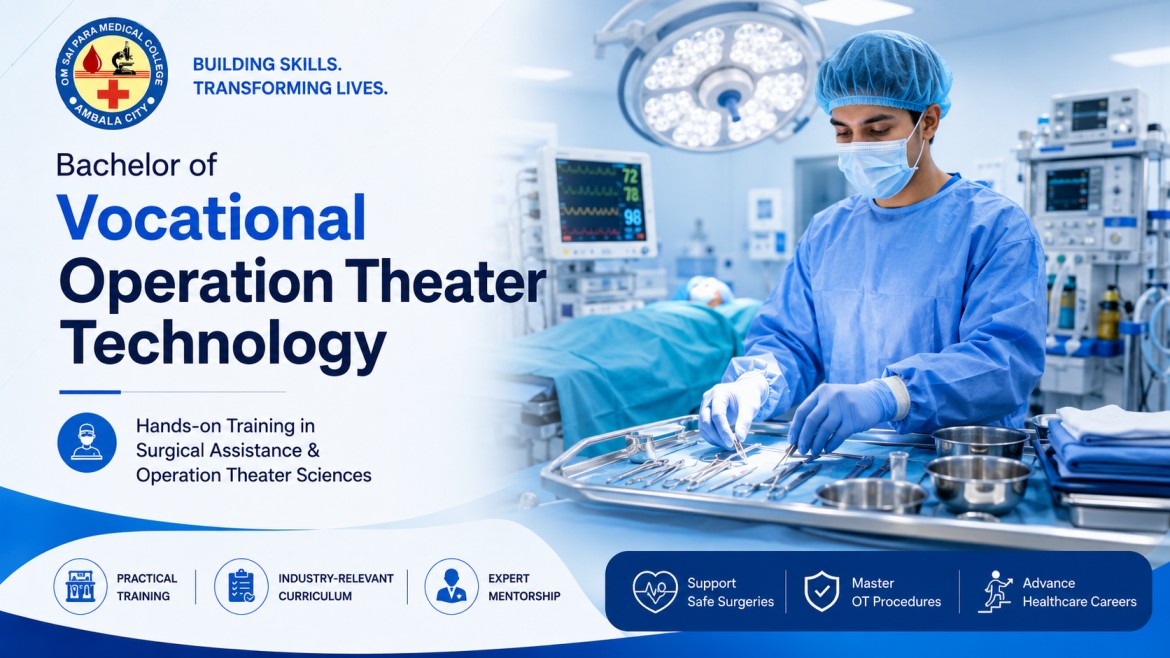
The Bachelor of Vocational (B.Voc.) Operation Theater Technology (OTT) program is designed to prepare students with the knowledge and practical skills required to assist surgeons, anesthetists, and healthcare professionals during surgical and emergency procedures. The course focuses on operation theater management, surgical assistance, infection control, sterilization techniques, patient monitoring, and operation theater equipment handling.
Operation Theater Technology professionals are essential members of surgical healthcare teams and play a critical role in maintaining safe, sterile, and efficient operation theater environments. This vocational program develops technical expertise and practical competencies needed for modern hospitals and healthcare institutions.
Course Details
This course combines classroom education, laboratory learning, and clinical hospital training. Students will gain expertise in:
Operation Theater Procedures – Understanding operation theater workflow and surgical processes.
Surgical Equipment Handling – Learning operation and maintenance of surgical instruments.
Human Anatomy & Physiology – Understanding body systems related to surgical care.
Sterilization & Infection Control – Maintaining sterile environments and preventing infections.
Anesthesia Technology Basics – Assisting anesthesia professionals during procedures.
Patient Care & Monitoring – Monitoring patients before, during, and after surgery.
Biomedical Equipment Handling – Understanding operation theater devices and monitoring systems.
Emergency & Trauma Care Support – Assisting in emergency and critical care situations.
Hospital Safety Standards – Learning healthcare regulations and patient safety protocols.
Clinical Internship & Practical Training – Hospital exposure and practical operation theater experience.
Eligibility Criteria
To enroll in Bachelor of Vocational Operation Theater Technology, candidates should fulfill the following eligibility requirements:
Educational Qualification – 10+2 (Intermediate) with Science stream (PCB/PCM preferred).
Minimum Qualification Requirement – As per university or institutional admission guidelines.
Interest in Healthcare & Surgical Technology – Candidates interested in surgical healthcare support are encouraged to apply.
Basic Scientific Understanding – Knowledge of Biology and healthcare concepts is beneficial.
Scope of This Course
Operation Theater Technology professionals are highly demanded in hospitals and healthcare institutions.
Career opportunities include:
Operation Theater Technologist
Assist surgeons and healthcare professionals during operations.
Operation Theater Technician
Prepare operation theaters and manage surgical equipment.
Surgical Assistant
Support healthcare teams during procedures.
Anesthesia Technician Assistant
Assist in anesthesia preparation and monitoring.
Emergency Care Technician
Support trauma and emergency medical care services.
Hospital Surgical Department Assistant
Coordinate operation theater activities and patient preparation.
Sterilization Technician
Manage sterilization and infection prevention protocols.
Employment opportunities are available in:
- Multi-specialty Hospitals
- Surgical Centers
- Trauma Centers
- Emergency Healthcare Units
- Government Hospitals
- Private Hospitals
- Medical Colleges
- Healthcare Institutions
Duration of the Course
The Bachelor of Vocational Operation Theater Technology program generally includes:
Degree Duration – 3 Years
The program includes theoretical learning, practical laboratory sessions, clinical training, and hospital internships.
Course Subjects
First Year Subjects
- Human Anatomy & Physiology
- Fundamentals of Operation Theater Technology
- Basic Microbiology
- Medical Terminology
- Infection Control Practices
- Communication Skills
- Computer Fundamentals
- Practical Laboratory Training
Second Year Subjects
- Surgical Procedures & Techniques
- Operation Theater Equipment
- Sterilization Techniques
- Anesthesia Technology Basics
- Patient Care & Monitoring
- Biomedical Equipment Handling
- Hospital Safety Standards
- Clinical Training
Third Year Subjects
- Advanced Operation Theater Technology
- Emergency & Trauma Management
- Surgical Assistance Procedures
- Healthcare Ethics
- Hospital Management Basics
- Quality Assurance in Healthcare
- Research Project
- Clinical Internship
Syllabus of the Course
Module 1: Introduction to Operation Theater Technology
- Introduction to healthcare systems
- Role of operation theater technologists
- Surgical team responsibilities
- Healthcare ethics and communication
- Operation theater workflow
Module 2: Human Anatomy & Physiology
- Human body systems
- Cardiovascular system
- Respiratory system
- Nervous system
- Musculoskeletal anatomy
- Anatomy relevant to surgical procedures
Module 3: Infection Control & Sterilization
- Infection prevention methods
- Sterilization principles
- Surgical instrument sterilization
- Biomedical waste management
- Hospital hygiene practices
Module 4: Operation Theater Equipment & Instrumentation
- Surgical instruments identification
- Operation theater table and lighting systems
- Electrosurgical equipment
- Suction apparatus
- Patient monitoring devices
- Equipment maintenance basics
Module 5: Surgical Procedures & Assistance
- Pre-operative preparation
- Intra-operative procedures
- Post-operative care support
- Surgical positioning techniques
- Assisting surgeons during procedures
Module 6: Anesthesia Technology Basics
- Types of anesthesia
- Anesthesia machine fundamentals
- Patient monitoring basics
- Airway management support
- Anesthesia safety protocols
Module 7: Patient Care & Monitoring
- Vital signs monitoring
- Patient safety measures
- Emergency patient care
- Critical care fundamentals
- Documentation procedures
Module 8: Emergency & Trauma Management
- Basic emergency procedures
- Trauma care support
- Emergency response systems
- Cardiopulmonary resuscitation (CPR) awareness
- Critical care assistance
Module 9: Healthcare Safety & Quality Standards
- Healthcare quality assurance
- Operation theater safety guidelines
- Infection prevention protocols
- Regulatory standards
- Documentation and reporting
Module 10: Clinical Training & Internship
- Hospital operation theater exposure
- Surgical department training
- Practical operation theater procedures
- Clinical case observations
- Internship in healthcare institutions
Practical Training Included
Students receive practical exposure in:
- Surgical Instrument Handling
- Operation Theater Setup
- Sterilization Procedures
- Patient Monitoring Techniques
- Surgical Assistance
- Biomedical Equipment Operation
- Infection Control Procedures
- Emergency Care Support
Skills Developed During the Course
Students will develop:
- Surgical Assistance Skills
- Equipment Handling Skills
- Infection Control Knowledge
- Technical Competency
- Patient Care Skills
- Emergency Response Skills
- Communication Skills
- Professional Healthcare Ethics
Career Opportunities After Completion
Graduates may work as:
- Operation Theater Technologist
- Operation Theater Technician
- Surgical Assistant
- Hospital Surgical Coordinator
- Sterilization Technician
- Emergency Care Technician
- Healthcare Support Professional
- Operation Theater Department Executive
Why Choose OSPMC?
At OSPMC, we focus on practical healthcare education and industry-oriented skill development.
Experienced Faculty – Learn from healthcare educators and surgical care professionals.
Practical Clinical Exposure – Hands-on operation theater and hospital training.
Industry-Focused Curriculum – Updated syllabus aligned with healthcare requirements.
Modern Training Facilities – Practical learning and healthcare laboratory exposure.
Recognition – Degree awarded by Lingaya’s Vidyapeeth University.
Career Guidance Support – Internship and placement assistance.
Affordable Fee Structure – Quality vocational education with practical learning.
Skill-Based Education – Focus on employability and healthcare competencies.